


Other Technology
Water Quality Measurement
Infrared Optics and Water Quality Sensing
Value of Optical Water Quality Sensors
- Stable Operation in Water
-
Stable operation through an optimal combination of optical design and proprietary algorithms
- Continuous Monitoring
-
Real-time monitoring of water quality at facilities, in water and wastewater systems, and in natural environments
- Reduced Maintenance Workload
-
Reduced installation and maintenance workload through wiper cleaning systems and a compact design
Optex’s Unique Strengths and Applications
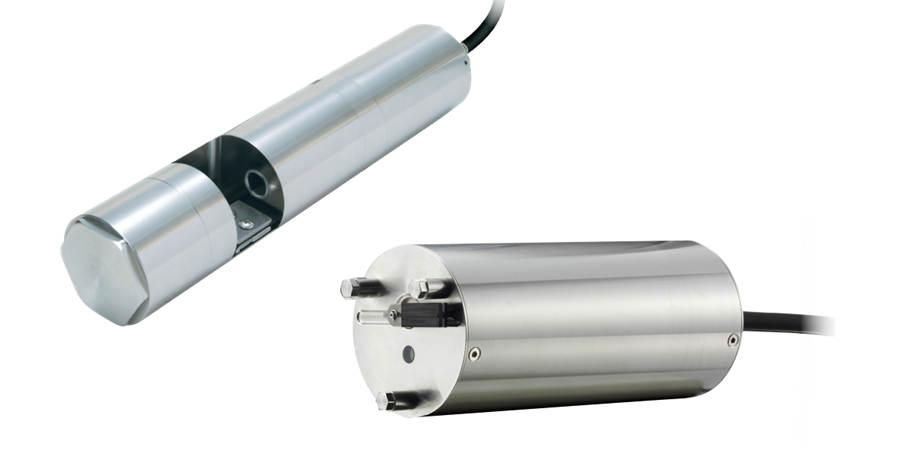
Diverse Lineup of Water Quality Sensors
Optex’s strengths include high-precision sensing algorithms developed across a variety of fields and the long-term reliability it has cultivated as an electronics manufacturer. The sensors’ compact design also provides greater flexibility in installation locations while reducing the burden of installation and maintenance.
Development of a Proprietary Data Management Service
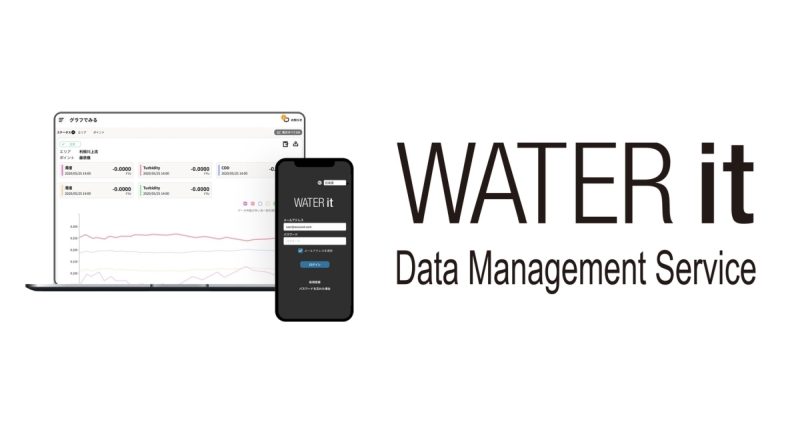
Data acquired by the sensors can be managed through the WATER it Data Management Service, enabling remote access to the latest data and identification of abnormal measurement values. This greatly reduces the on-site workload.
Collaboration with Other Companies
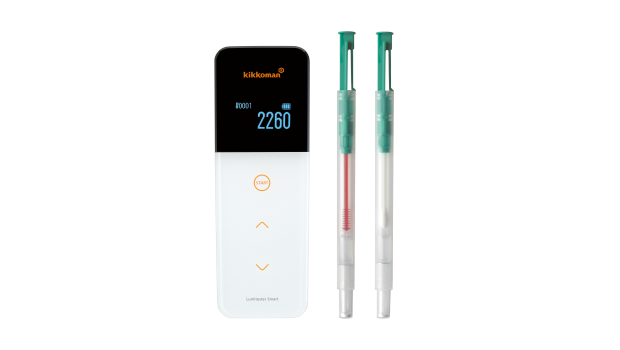
One representative example of joint development is the Lumitester Smart, developed jointly with Kikkoman Biochemifa Company using its bioluminescence technology to visualize ATP contamination with light. Optex contributed field-oriented design expertise extending to the UI, enclosure, and operability, and the product received the Commissioner of Japan Patent Office Award at the 2024 National Commendation for Invention.
Expert Interview
-

Yoshiharu Okumura
DepartmentNext Social Solution Business Div. Engineering & Development Dept
The Key to Infrared Water Quality Sensing
Optical measurement in water is subject to significant environmental noise from factors such as air bubbles, deposits, and fluctuations in turbidity, so sensor performance alone is not sufficient to ensure stable measurements.
In its water quality measurement solutions, Optex applies technologies cultivated over its long history in infrared sensors, including optimization of optical structures, temperature compensation, noise-reduction algorithms, and long-term durability design. Another major strength is the ability to create designs that make full use of existing on-site assets, such as universal converters that allow installed water quality sensors to remain in use. Optex’s technology is also consistent throughout, extending from infrared sensing to water quality measurement and on to digital transformation (DX).
OTHER
TECHNOLOGIES
-
Passive-Infrared
Far infrared is a passive sensing technology that detects thermal energy emitted by people and objects.Non-contact, low-power, and effective in dark environments, it serves as a core human detection technology developed through our experience with automatic doors and outdoor security.
-
Active-Infrared
Near infrared is an active sensing technology that uses LED illumination to detect changes in reflected or blocked light.This technology allows for precise detection area control and is widely used for stable detection in applications such as automatic doors, active infrared (AIR) security systems, and water quality measurement.
-
Infrared Laser
LiDAR is an optical ranging technology that uses laser time-of-flight (ToF) measurement to determine the distance to and shape of a target with high accuracy.It is applied to precision spatial sensing in applications such as outdoor intrusion detection and critical facility monitoring, including REDSCAN.
-
Doppler Radar (Microwave)
This radar technology detects moving objects using reflected radio waves and the Doppler effect. It is relatively unaffected by rain, fog, snow, or lighting conditions and is used for outdoor applications such as vehicle detection, parking lots, and gate operation.
-
FMCW Radar (Microwave/Millimeter Wave)
FMCW is a radar ranging method that analyzes the distance to and speed of a target from the beat frequency between a frequency-modulated continuous wave and its reflected wave.
-
MIMO Radar (Microwave/Millimeter Wave)
MIMO radar uses multiple transmitting and receiving antennas to form a virtual array, improving angular resolution and direction estimation. Highly resistant to adverse weather and darkness, it can be used for long-range detection in applications such as outdoor security, vehicle detection, and critical facility monitoring.
-
Image Recognition Technology
This sensing technology uses camera images to perform tasks such as object detection and classification, pose estimation, and people tracking. It is used for security, people counting, access control, and other applications, providing advanced situational awareness by detecting the movements of people and objects.
-
Vibration Detection Technology
Vibration detection sensors measure vibration to detect intrusion, impacts, and equipment abnormalities. Optex uses this technology to improve the reliability of outdoor security and equipment monitoring.