


Infrared Technology
Near Infrared and Sensing
Value of Active-Infrared Sensors
- Non-Contact Detection Using Reflected Light
-
Detects changes in the amount of light reflected from floors and objects without requiring physical contact with the target
- Reliable Detection of Stationary Objects
-
Continuously detects the presence of an object even when it stops moving
- Highly Flexible Detection Area Settings
-
Creates more clearly defined detection areas than far-infrared sensors
Optex’s Unique Strengths and Applications
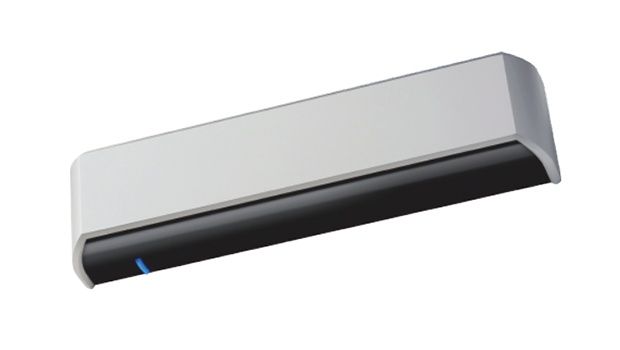
Automatic Door Sensors
Near-infrared reflection is now the predominant method used in automatic door sensors. By detecting stationary people and creating detection areas suited to the environment, it provides both safety and comfort at entrances.
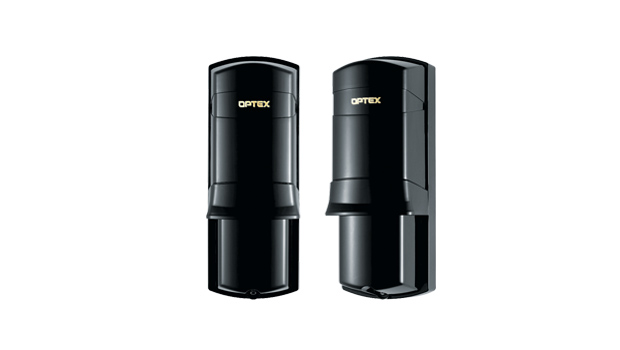
AIR Sensors for Security
For outdoor security applications, Optex offers Active InfraRed (AIR) sensors that trigger an alarm when multiple near-infrared beams are crossed. Through optical design and proprietary algorithms, the sensors suppress environmental interference such as fog, light rain, and insects to provide stable human detection.
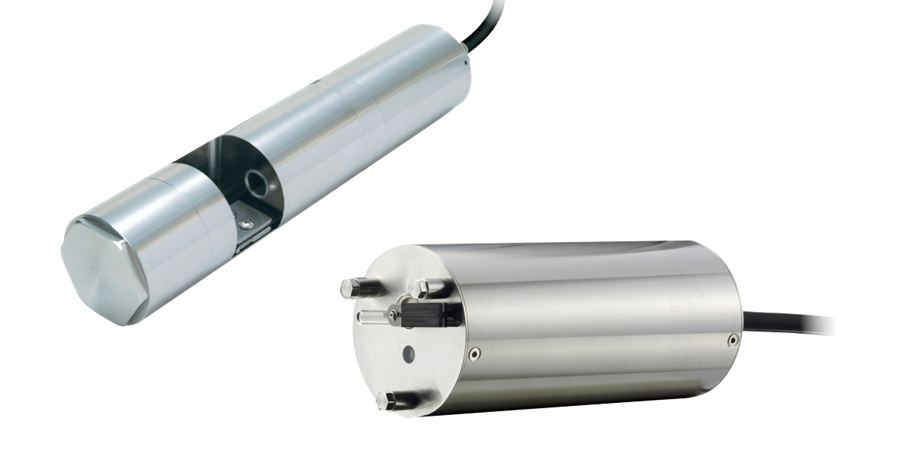
Turbidity Sensors for Water Quality Testing
Near infrared is well suited to measuring the amount of light scattered by turbidity in water.
Expert Interview
-

Yusuke Yoshino
DepartmentEntrance Business Div. Engineering & Development Dept.
The Key to Near-Infrared AIR Is Adaptability to Environmental Conditions
Although near infrared is easy to use, when outdoors, it is affected by various sources of interference, including reflected sunlight, rain, snow, and insects. Optex reduces the effects of such interference through a combination of optical design and algorithms, creating sensors that operate stably both indoors and outdoors. Outdoor applications such as AIR beams in particular require careful field verification, and Optex has achieved a leading share of the global market through its ability to fine-tune products based on field data accumulated over many years.
OTHER
TECHNOLOGIES
-
Passive-Infrared
Far infrared is a passive sensing technology that detects thermal energy emitted by people and objects.Non-contact, low-power, and effective in dark environments, it serves as a core human detection technology developed through our experience with automatic doors and outdoor security.
-
Infrared Laser
LiDAR is an optical ranging technology that uses laser time-of-flight (ToF) measurement to determine the distance to and shape of a target with high accuracy.It is applied to precision spatial sensing in applications such as outdoor intrusion detection and critical facility monitoring, including REDSCAN.
-
Doppler Radar (Microwave)
This radar technology detects moving objects using reflected radio waves and the Doppler effect. It is relatively unaffected by rain, fog, snow, or lighting conditions and is used for outdoor applications such as vehicle detection, parking lots, and gate operation.
-
FMCW Radar (Microwave/Millimeter Wave)
FMCW is a radar ranging method that analyzes the distance to and speed of a target from the beat frequency between a frequency-modulated continuous wave and its reflected wave.
-
MIMO Radar (Microwave/Millimeter Wave)
MIMO radar uses multiple transmitting and receiving antennas to form a virtual array, improving angular resolution and direction estimation. Highly resistant to adverse weather and darkness, it can be used for long-range detection in applications such as outdoor security, vehicle detection, and critical facility monitoring.
-
Water Quality and Hygiene Applications
Optical water quality sensors use multiple wavelengths of light, including near-infrared, infrared, and UV, to detect changes in turbidity, color, scattering, and absorbance. They can be used for water quality management, including continuous monitoring of drinking water, wastewater, and industrial effluent.
-
Image Recognition Technology
This sensing technology uses camera images to perform tasks such as object detection and classification, pose estimation, and people tracking. It is used for security, people counting, access control, and other applications, providing advanced situational awareness by detecting the movements of people and objects.
-
Vibration Detection Technology
Vibration detection sensors measure vibration to detect intrusion, impacts, and equipment abnormalities. Optex uses this technology to improve the reliability of outdoor security and equipment monitoring.