


Other Technology
Image Recognition and Sensing
Value of Image Recognition Sensors
- Advanced Feature Extraction
-
Analyzes multidimensional data such as color, shape, posture, direction, and speed
- Situational Awareness
-
Detects loitering, wrong-way movement, and tailgating while distinguishing people from shadows
- High Flexibility
-
Can be adapted to a wide range of applications simply by modifying algorithms
Optex’s Unique Strengths and Applications
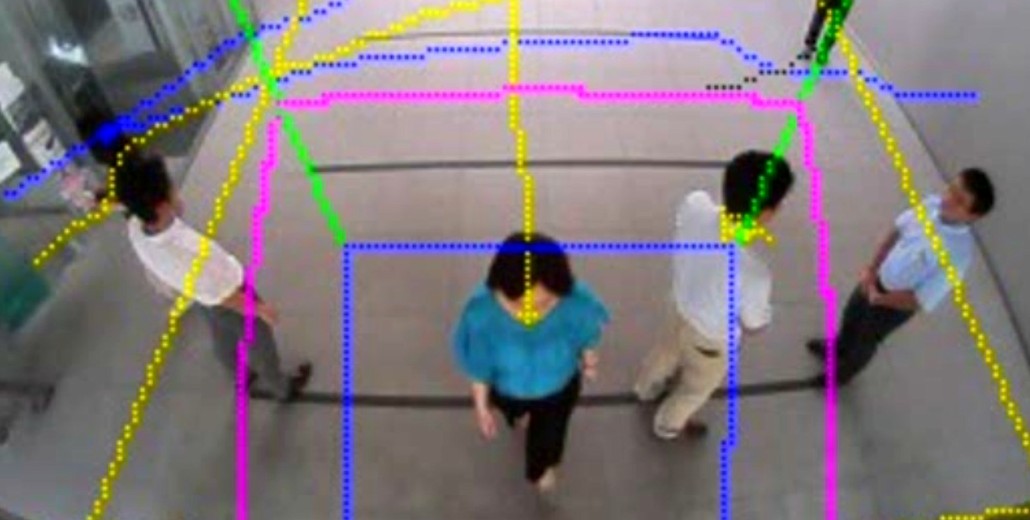
Object Shape Recognition Using the Vector Focus Method
Using its proprietary image processing algorithm, the Vector Focus Method (patented worldwide), Optex performs high-speed people counting directly on the sensor device through edge processing. It counts accurately and with high precision even in locations where large numbers of people pass through simultaneously.
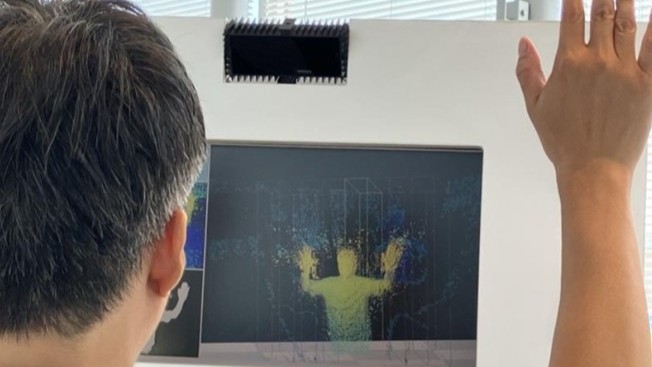
3D Range Image Sensing (ToF Method)
Rather than using a conventional camera-based method, Optex also has technology that uses the ToF (Time of Flight) method with near-infrared LEDs to obtain distance information for each pixel. It accurately captures three-dimensional shapes and is applied to people-flow analysis and hazardous-area monitoring.
Expert Interview
-

Masayuki Shimazu
DepartmentEntrance Business Div. Engineering & Development Dept.
Optex Image Recognition Technology Makes the Difference in Real-World Operation
The advantage of Optex’s image recognition technology lies not only in its high-performance image processing technology, but also in algorithm optimization based on in-depth real-world expertise across a wide variety of installation environments. Years of accumulating vast amounts of noise data involving rain, backlighting, small animals, shadows, and other factors have given Optex the ability to extract only the target while suppressing false detection, providing a clear competitive advantage in real-world operation. Furthermore, by adopting edge computing and designing systems that process and complete image data analysis on-site, Optex’s systems achieve real-time performance and data-efficient operation while also incorporating privacy protections.
OTHER
TECHNOLOGIES
-
Passive-Infrared
Far infrared is a passive sensing technology that detects thermal energy emitted by people and objects.Non-contact, low-power, and effective in dark environments, it serves as a core human detection technology developed through our experience with automatic doors and outdoor security.
-
Active-Infrared
Near infrared is an active sensing technology that uses LED illumination to detect changes in reflected or blocked light.This technology allows for precise detection area control and is widely used for stable detection in applications such as automatic doors, active infrared (AIR) security systems, and water quality measurement.
-
Infrared Laser
LiDAR is an optical ranging technology that uses laser time-of-flight (ToF) measurement to determine the distance to and shape of a target with high accuracy.It is applied to precision spatial sensing in applications such as outdoor intrusion detection and critical facility monitoring, including REDSCAN.
-
Doppler Radar (Microwave)
This radar technology detects moving objects using reflected radio waves and the Doppler effect. It is relatively unaffected by rain, fog, snow, or lighting conditions and is used for outdoor applications such as vehicle detection, parking lots, and gate operation.
-
FMCW Radar (Microwave/Millimeter Wave)
FMCW is a radar ranging method that analyzes the distance to and speed of a target from the beat frequency between a frequency-modulated continuous wave and its reflected wave.
-
MIMO Radar (Microwave/Millimeter Wave)
MIMO radar uses multiple transmitting and receiving antennas to form a virtual array, improving angular resolution and direction estimation. Highly resistant to adverse weather and darkness, it can be used for long-range detection in applications such as outdoor security, vehicle detection, and critical facility monitoring.
-
Water Quality and Hygiene Applications
Optical water quality sensors use multiple wavelengths of light, including near-infrared, infrared, and UV, to detect changes in turbidity, color, scattering, and absorbance. They can be used for water quality management, including continuous monitoring of drinking water, wastewater, and industrial effluent.
-
Vibration Detection Technology
Vibration detection sensors measure vibration to detect intrusion, impacts, and equipment abnormalities. Optex uses this technology to improve the reliability of outdoor security and equipment monitoring.